

Wie jedes Jahr haben wir wie auf glühenden Kohlen darauf gewartet: Die Nominierten Spiele für die Wahl zum „Spiel des Jahres 2022“ sind von der Jury bekannt gegeben worden. In einer kleinen Übersicht stellen wir euch die norminierten Brettspiele in den Bereichen „Spiel des Jahres“ und „Kennerspiel des Jahres“ vor. Wie immer überspringen wir hier das „Kinderspiel des Jahres“, da diese Kategorie einfach nicht in unserem Spielefokus steht.
In diesem Jahr gibt es eine bunte Auswahl an Spielen in der Kategorie Spiel des Jahres. Es sind Cascadia von Randy Flynn (Kosmos) nominiert, in dem ihr Landschaften legt und Tiere dort ansiedelt. Bei Scout von Kei Kajino (Oink Games) führt ihr mit den Karten in eurer Hand Zirkusnummern vor. Dabei müsst ihr eure Konkurrenten übertreffen. Top Ten von Aurélien Picolet (Cocktail Games und Asmodee) ist ein Partyspiel, bei dem ihr in witzigen Szenarien Begriffe einem Wert auf einer Skala von 1 bis 10 nennt und zuordnet.
Beim Kennerspiel des Jahres, unserem eigentlichen Steckenpferd, was unser eigenes Spielinteresse angeht, sind ebenfalls tolle Spiele nominiert. Bei Cryptid von Hal Duncan und Ruth Veevers (Skellig Games) sucht ihr mit euren deduktiven Fähigkeiten nach dem Lebensraum eines sagenumwobenen Monsters. Das nominierte Dune: Imperium von Paul Dennen (Dire Wolf / Asmodee) fängt die Atmosphäre des gleichnamigen Kinofilms aus 2021 hervorragend ein uns bietet einen Mix aus unterschiedlichen Mechanismen. Auch das nominierte Living Forest von Aske Christiansen (Pegasus Spiele) war bereits in aller Munde. In diesem Wettrenn-Spiel rettet ihr den Wald vor einem bösen Feuer-Geist.
Nominiert zum Spiel des Jahres 2022
Cascadia
 Wunderschöne Landschaften, Tiere und einfache Spielregeln kommen in Cascadia zusammen und machen es zu einem Spiel, das man einfach immer wieder spielen möchte. Über 20 Runden wählt ihr jeweils eine Kombination aus Landschaftsplättchen und Tier aus und legt beides bei euch in den Spielbereich. Landschaften sollten dabei immer möglichst passend angelegt werden, damit sich zum Beispiel eure Berge und Wälder über möglichst viele zusammenhängende Plättchen erstrecken, denn das gibt nachher Punkte. Wie ihr bei den Tieren punktet, hängt von den Zielkarten ab. Mal möchten die Bären alleine sein, mal soll es möglichst viele Gruppen aus bis zu 3 Bären gebe. Einmal braucht es möglichst lange Lachs-Ketten und ein andermal dürfen diese nicht mehr zu lang werden. Hier hat Randy Flynn viel Abwechslung bei Cascadia ins Spiel gebracht.
Wer es noch verzwickter will, der kann auch noch spezielle Herausforderungen mit ins Spiel bringen. Da dürfen dann neu genommene Tiere zum Beispiel nicht auf das gerade genommene Landschaftsplättchen platziert werden. Hier wird es also erst einmal nicht langweilig und vor allem lässt sich Cascadia sehr schön im Schwierigkeitsgrad an die Gruppe anpassen. Wer mehr über Cascadia erfahren möchte, der kann sich auch gerne in unserem ausführlichem Review zum Brettspiel informieren.
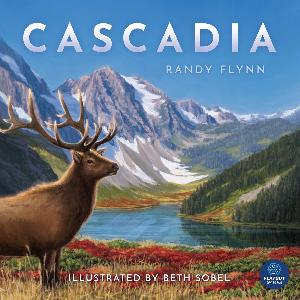
In the game, you take turns building out your own terrain area and populating it with wildlife. You start with three hexagonal habitat tiles (with the five types of habitat in the game), and on a turn you choose a new habitat tile that's paired with a wildlife token, then place that tile next to your other ones and place the wildlife token on an appropriate habitat. (Each tile depicts 1-3 types of wildlife from the five types in the game, and you can place at most one token on a habitat.) Four tiles are on display, with each tile being paired at random with a wildlife token, so you must make the best of what's available — unless you have a nature token to spend so that you can pick your choice of each item.
Ideally you can place habitat tiles to create matching terrain that reduces fragmentation and creates wildlife corridors, mostly because you score for the largest area of each type of habitat at game's end, with a bonus if your group is larger than each other player's. At the same time, you want to place wildlife tokens so that you can maximize the number of points scored by them, with the wildlife goals being determined at random by one of the four scoring cards for each type of wildlife. Maybe hawks want to be separate from other hawks, while foxes want lots of different animals surrounding them and bears want to be in pairs. Can you make it happen?
Scout
 Ganz typisch für den Verlag Oink Games kommt Scout in einer kleinen Schachtel daher. Es heischt auch mit seiner eher zurückhaltenden Gestaltung wenig nach Aufmerksamkeit, im Vergleich zu anderen Spielen im Regal. Doch hier darf man sich nicht täuschen lassen, denn in die kleine Schachtel von Scout hat der Autor Kei Kajino jede Menge Spiel gepackt.
Ihr bekommt zunächst jeder eine Hand voll Karten, die ihr nicht umsortieren, jedoch umdrehen dürft, denn auf jeder Karte befinden sich zwei verschiedene Zahlen. Das sind eure Artisten, mit denen ihr nun Aufführungen zusammenstellen und damit eure Mitspielenden übertreffen müsst. Dabei sind gleiche Zahlenpaare, Drillinge oder auf Straßen an Zahlen gesucht. Da diese eher selten beim Geben bereits so auf eurer Hand vorhanden sind, müsst ihr geschickt Karten herausnehmen und wenn ihr die Vorausgegangene Aufführung nicht übertreffen könnt, so könnt ihr zumindest eine der Karten/Artisten abwerben und bei euch in der Hand beliebig einsortieren. Wenn jemand am Tisch es schafft, seine Hand leer zu spielen, bekommt ihr jedoch Minuspunkte, für noch nicht ausgespielte Karten.
Hier entsteht Spannung am Spieltisch und hat man sich erst einmal daran gewöhnt, dass man an seiner Hand nicht viel verändern kann, entstehen hier ähnlich emotionale Runden wie bei Krass Kariert, einem unserer Lieblings-Stichspiele. Wenn ihr mehr über Scout lesen möchtet, so können wir euch unsere ausführliche Rezension ans Herz legen.

More specifically, cards are dual-indexed, with different values on each half of the card, with the 45 cards having all possible combinations of the numbers 1-10. During set-up, whoever is shuffling the cards should randomize both the order of the cards in the deck and their orientation. Once each player has been dealt their entire hand of cards, they pick up that hand without rearranging any of the cards; if they wish, they can rotate their entire hand of cards in order to use the values on the other end of each card, but again they cannot rearrange the order of cards in their hand.
On a turn, a player takes one of two actions:
• Play: A player chooses one or more adjacent cards in their hand that have all the same value or that have values in consecutive order (whether ascending or descending), then they play this set of cards to the table. They can do this only if the table is empty (as on the first turn) or the set they're playing is ranked higher than the set currently on the table; a set is higher if it has more cards or has cards of the same value instead of consecutive cards or has a set of the same quantity and type but with higher values. In this latter case when a player overplays another set, the player captures the cards in this previous set and places them face down in front of themselves.
• Scout: A player takes a card from either end of the set currently on the table and places it anywhere they wish in their hand in either orientation. Whoever played this previous set receives a 1 VP token as a reward for playing a set that wasn't beaten.
Once per round, a player can scout, then immediately play.
When a player has emptied their hand of cards or all but one player have scouted instead of playing, the round ends. Players receive 1 VP for each face-down card, then subtract one point for each card in their hand (except if they were the player scouted repeatedly to end the game). Play as many rounds as the number of players, then whoever has the most points wins.
Top Ten
 Nachdem es im letzten Jahr Corona-Bedingt kein Party-Spiel auf der Nominierungs-Liste gab, hat Top Ten sich hier nun seinen Platz ganz oben gesichert. Hier heißt es kreativ werden und sich eine passende Antwort oder Pantomime ausdenken, die zu der Zahl bei der man sich einsortieren muss und zu der Aufgaben, die Aurélien Picolet in die Schachtel gepackt hat, passt. Theoretisch kann man Punkte zählen, wenn der Kapitän versucht, die gegebenen Antworten in die richtige Reihenfolge zu bringen. Aber das ist manchmal gar nicht so einfach, aber immer lustig. Wenn zum Beispiel der Hund nach dem Besuch der Hundeschule dir plötzlich morgens frische Brötchen holt und Kaffee kocht, ist das bestimmt ganz erstaunlich und dass er dann das Kommando Sitz kann, ist wohl nicht überraschend. Aber wo ordnet ihr dann ein, dass er die Nationalhymne bellen kann?
Wie lustig eine Runde Top Ten wird, hängt aber auch immer von den Mitspielern ab. Man muss das schon mögen und sich auch mal zum Affen machen können. Denn es bleibt nicht nur beim erklären, auch die gefürchtete Pantomime kommt zum Einsatz. Sitzen die richtigen Menschen am Tisch, freut man sich auf jede Runde und das liegt vor allem auch an den kreativen und abwechslungsreichen Aufgaben, die Lacher garantieren.
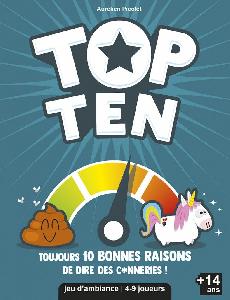
To start the game, place a number of unicorn tokens on the game board. Choose one player to be the round's chief. That player gives all players a random card numbered 1-10, then they read one of the five hundred theme cards included in the game, e.g., "Batman wants to replace Robin to fight the bad guys. Create a new duo 'Batman and ...' from the worst to the best." The chief looks at their number, then gives an answer based on their number. If they have a 1, they want to give the worst possible suggestion; if a 10, the best; if a 5-7, somewhere in the middle.
Each other player then gives an answer to this theme based on the number they were dealt, then the chief needs to decide who has the lowest number, then the next lowest, and so on. For each mistake, the chief flips a unicorn token over to its poop side.
If all the unicorns have left by the end of the fifth round, leaving you with nothing but poop, then you lose. Otherwise you win!
Nominiert zum Kennerspiel des Jahres 2022
Cryptid
 Irgendwo auf der ausliegenden Landkarte versteckt sich das Monster, nach dem wir alles suchen. Jeder von uns hat einen eigenen Hinweis darauf, wo es sich befindet, aber als Krytozoologen möchten wir den Ruhm für die Entdeckung natürlich selbst einheimsen und so geben wir bei der Zusammenarbeit am besten so wenig Informationen wie möglich an die Konkurrenz weiter. Hal Duncan und Ruth Veevers setzen bei Cryptid auf Deduktion und haben ein anspruchsvolles Logikpuzzle am Brettspiel-Tisch erschaffen, das jedesmal anders ist.
Es geht bei Cryptid eigentlich noch nicht mal um das sagenumwobene Tier, sondern einzig und allein darum, durch Hinweise wie „Es befindet sich in der Wüste oder im Gebirge“ oder „Es befindet sich innerhalb von drei Feldern um einen Hinkelstein“ das eine Feld auf dem Spielplan zu finden, auf dem es sich befindet. Dabei hat jeder am Tisch nur einen der Hinweise und wir müssen uns gegenseitig befragen, ob es sich dort aufhalten könnte, um über die dadurch ausgelegten Markierungen als erstes auf des Rätsels Lösung zu kommen. Cryptid hat bei aller Eleganz des Designs aber auch ein paar Probleme: So ist es ganz entscheidend, dass niemand aus Versehen eine falsche Antwort auf eine Nachfrage gibt. Denn dann ist die innere Logik der Hinweise zerstört und meist lässt sich nicht mehr rekonstruieren, was denn eine richtige Antwort gewesen wäre. So braucht es meist ein bis zwei Runden, bis alle am Tisch wissen, worauf es ankommt. Wenn dieser Punkt jedoch erreicht ist, kommt Cryptid bei Rätselfreunden durchaus gut an und es wird immer noch eine weitere Partie gespielt.
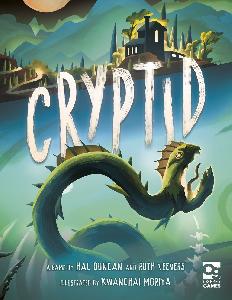
Cryptid is a unique deduction game of honest misdirection in which players must try to uncover information about their opponents' clues while throwing them off the scent of their own. Each player holds one piece of evidence to help them find the creature, and on their turn they can try to gain more information from their opponents. Be warned; give too much away and your opponents might beat you to the mysterious animal and claim the glory for themselves!
The game includes a modular board, five clue books, and a deck of set-up cards with hundreds of possible set-ups across two difficulty levels. It is also supported by an entirely optional digital companion, allowing for faster game set-up and a near-infinite range of puzzles.
—description from the publisher
Note: some copies have a delta clue booklet with misprints in eight clues:
2,#9,#13,#64 states cougar, should be bear
3,#63,#72,#95 states bear, should be cougar
Dune: Imperium
 Es gibt wenige Brettspiele mit einer Film-Lizenz, die auch was taugen. Bei Dune sieht dies alles ein wenig anders aus. Hier kann man schon fast sagen, dass die Dune-Brettspiele der letzten Jahre mehr oder weniger alle gelungen sind. Und auch Dune: Imperium von Autor Paul Dennen gehört eindeutig dazu. Dabei gibt es in Dune: Imperium nicht den einen Mechnanismus oder eben das eine Dinge, was das Brettspiel auszeichnet. Vielmehr ist das schöne Zusammenfließen von den verschiedensten Mechanismen, die ineinander greifen.
Da habe ich den Deckbau, der genauso wichtig ist, wie das Element des Konfliktes, der in jeder Runde stattfindet und gerade zum Ende hin viele Punkte abwirft. Das Ganze ist dann noch verpackt in eine Thematik, in der Dune bzw. Arrakis auch lebt. Wer die Kontrolle über den Planeten bekommt, der wird auch zum Sieger gekürt. Oder etwa doch nicht? Denn oft, wird der schon gefeierte Sieger durch eine Intrige gestürzt und ein anderer am Tisch erhebt sich zum Herrscher. Dune: Imperium ist jedes Mal ein episches Brettspiel-Abenteuer, was einfach nur zu gerne auf unserem Tisch landet. Wenn ihr euch noch unsicher seid, ob ihr einen Ausflug auf den Wüstenplaneten machen möchtet, lest doch einfach mal in unsere ausführliche Review zu Dune: Imperium.
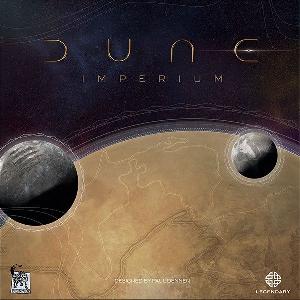
As a leader of one of the Great Houses of the Landsraad, raise your banner and marshal your forces and spies. War is coming, and at the center of the conflict is Arrakis – Dune, the desert planet.
You start with a unique leader card, as well as a deck identical to those of your opponents. As you acquire cards and build your deck, your choices will define your strengths and weaknesses. Cards allow you to send your Agents to certain spaces on the game board, so how your deck evolves affects your strategy. You might become more powerful militarily, able to deploy more troops than your opponents. Or you might acquire cards that give you an edge with the four political factions represented in the game: the Emperor, the Spacing Guild, the Bene Gesserit, and the Fremen.
Unlike many deck building games, you don’t play your entire hand in one turn. Instead, you draw a hand of cards at the start of every round and alternate with other players, taking one Agent turn at a time (playing one card to send one of your Agents to the game board). When it’s your turn and you have no more Agents to place, you’ll take a Reveal turn, revealing the rest of your cards, which will provide Persuasion and Swords. Persuasion is used to acquire more cards, and Swords help your troops fight for the current round’s rewards as shown on the revealed Conflict card.
Defeat your rivals in combat, shrewdly navigate the political factions, and acquire precious cards. The Spice must flow to lead your House to victory!
Some important links: The Official FAQ, the Unofficial FAQ, and an Automa (solo and 2p) Overview
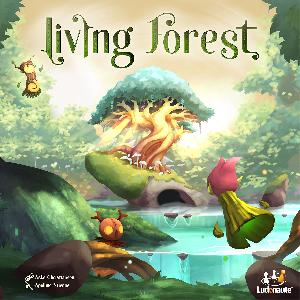
Living Forest

Schnell, der Wald braucht unsere Hilfe und wir als Waldgeister mit unseren tierischen Freunden können ihm helfen. Wer jetzt allerdings denkt, das Living Forest von Aske Christiansen einen kooperativen Ansatz besitzt, der liegt komplett falsch. In Living Forest bekämpft jeder Waldgeist den bösen Dämon alleine, natürlich machen wir das nicht des Ruhmes und der Ehre willen, also vielleicht nur ein wenig. Es geht uns um knallharte Punkte, die es zu verdienen gibt. Mit fünf überschaubaren Aktionen, versuchen wir nicht nur die Feuer zu löschen oder neue Bäume zu pflanzen. Nein, wir versuchen auch die anderen Waldgeister zu übertrumpfen, um so zu zeigen, dass nur wir die richtige Wahl für den besten Waldgeist sind.
Dabei findet sich in Living Forest nicht nur schönes Spielmaterial, auch das Spiel kommt mit einem hohen Wiederspielreiz daher. Nicht nur, weil es verschiedene Möglichkeiten gibt, um das Spielende auszulösen, sondern auch, weil es eigentlich jedesmal knapp ist. Es ist eben ein Wettrennen und je häufiger man spielt, desto ausgefeilter wird die Taktik mit und gegen die anderen Spieler:innen am Tisch. Und auch bei uns kommt Living Forest daher sehr oft auf den Brettspiel-Tisch, denn es gilt ja den Wald zu retten und nicht den anderen Mitspielenden eines auszuwischen, oder? Wenn ihr es noch genauer wissen möchtet, lest in unser ausführliches Review rein.
You have one of three ways to achieve your goal: by planting 12 different Protective Trees, by collecting 12 Sacred Flowers to awaken Sanki the great Guardian of the Forest, by extinguishing 12 Fires to permanently repel Onibi.
Each turn includes 3 phases:
• Guardian Animals (simultaneous push your luck phase) : You draw and turn face up, one after the other, the Guardian Animal cards from your personal stack. You thus form the Animal Guardian Help Line. You can stop drawing cards whenever you want. However, if you reveal a card showing a third solitary symbol, then you must stop drawing cards. This card closes your Help Line.
• Action phase: You play in turn. If your Help Line shows strictly less than three solitary symbols (not canceled by gregarious symbols), you can then perform 2 different Actions. If your Help Line shows three solitary symbols (not canceled by gregarious symbols), you can then perform only 1 Action. The strength of an Action is determined by the number of corresponding Elements visible on the Guardian Animal cards in your Help Line and on your Forest individual board.
• End of the turn:
- Onibi attacks you: If some Fires remain at the center of the Circle of Spirits and you cannot resist them, then add as many Fire Varan cards to your discard stack as there are Fire tiles at the center of the Circle of Spirits.
- Onibi attacks the Sacred Tree: Add as many Fires to the center of the Circle of Spirits as there are Guardian Animal cards taken this turn.
- The arrival of new Guardian Animals: Complete the Guardian Animal reserve by revealing as many new cards per level as there were cards taken this turn.
- Passing the Sacred Tree: Give the Sacred Tree to the next Spirit of Nature clockwise.
- The Return of Guardian Animals: Move all the Animal Guardian cards from your Help Line to your personal discard stack.
The game stops at the end of a complete turn when one of the Spirits of Nature has managed to collect at least 12 different Protective Trees OR 12 Fires OR 12 Sacred Flowers.


